

Ultrex Performs Better in Desert Heat
Ultrex is the stronger and more heat-stable of the two materials, and in a Las Vegas climate that makes it the better choice. In Marvin’s published testing, Ultrex is eight times stronger than vinyl and three times stronger than Fibrex, holds its shape at temperatures up to 285°F, and expands and contracts far less when the temperature swings.
Ultrex is a pultruded fiberglass made by Marvin, and Fibrex is a composite of reclaimed wood fiber and thermoplastic polymer made by Andersen for Renewal by Andersen windows. Both improve on builder-grade vinyl, but Ultrex leads the manufacturer-published comparison on strength and thermal stability. In a city where a west-facing window frame bakes in triple-digit sun all afternoon and cools quickly after sunset, that stability helps determine how a window ages.
That’s the summary. The rest of this guide explains what each material is, how the two compare point by point, and how to verify the claims for yourself before you buy windows from anyone, including us.
What Is Ultrex?
Ultrex is a pultruded fiberglass, the material every Infinity by Marvin window and patio door is built from. It starts as millions of glass strands saturated in resin, then pulled through a heated die. The strands cure into a single rigid profile, which is why a fiberglass frame behaves less like a plastic extrusion and more like a structural building material.
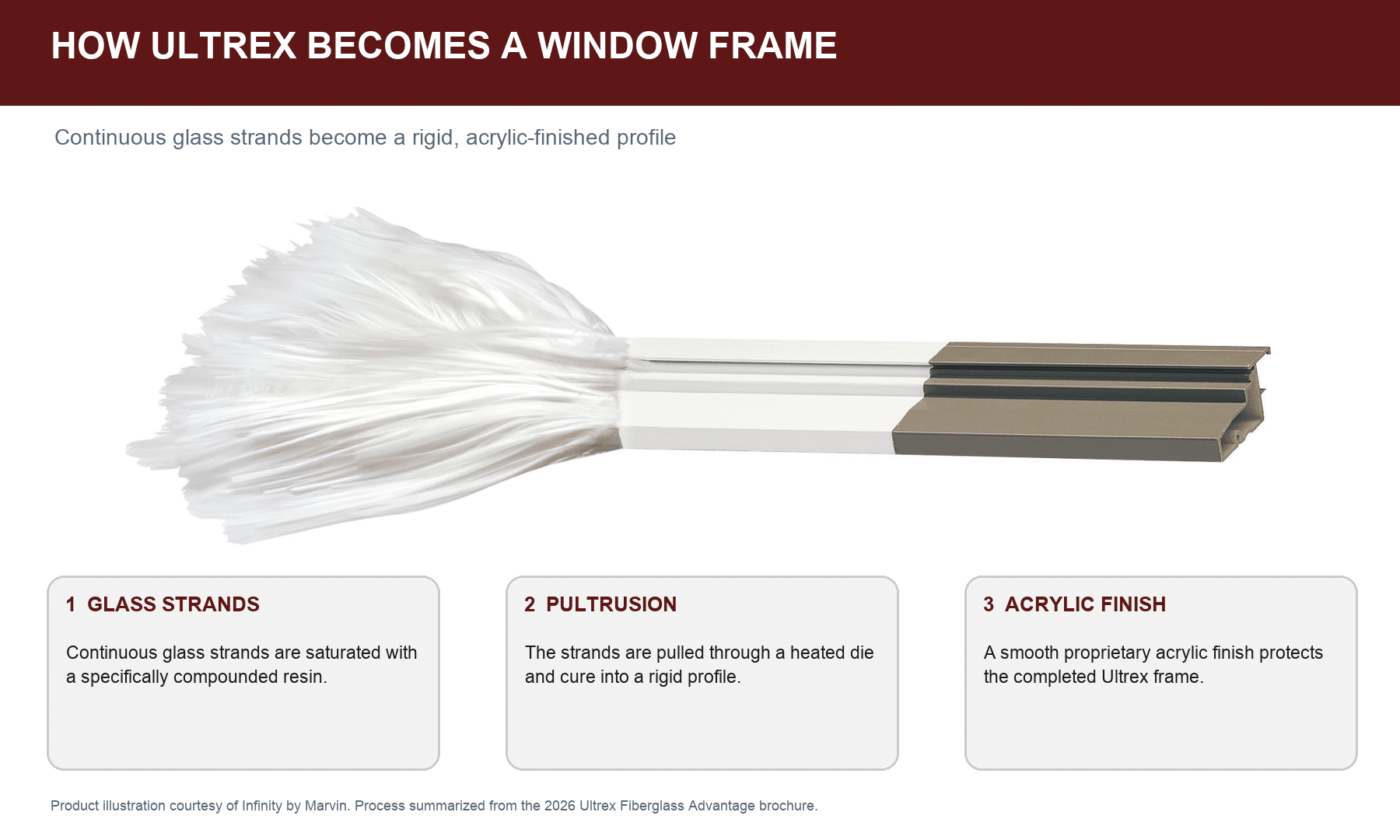
Marvin then finishes the frame with a thick acrylic coating. Infinity’s 2026 Ultrex brochure says the finish is verified to the AAMA 624 specification and is three times thicker than competitive painted finishes. That surface is designed to resist dents, scratches, chalking, and fading under long-term sun exposure. Master Craftsmen offers Ultrex fiberglass through the Infinity by Marvin replacement-window line and has been helping Southern Nevada homeowners replace their windows for over 20 years. Our Infinity by Marvin windows page covers the full line we carry and install.
What Is Fibrex?
Fibrex is Andersen’s proprietary composite material. Renewal by Andersen describes Fibrex as reclaimed wood fiber fused with thermoplastic polymer. The wood fiber adds stiffness, while the polymer binds the material and forms its finished surface.
Credit where it’s due. Fibrex is a real engineering effort, and next to an ordinary vinyl frame it’s a genuine upgrade. Andersen has built a national brand on it. The question Las Vegas homeowners face isn’t Fibrex versus cheap vinyl, though. It’s Fibrex versus Ultrex, and that matchup plays out differently.
Ultrex vs. Fibrex: Strength, Heat, Movement, and Finish
Ultrex leads the manufacturer-published comparison on strength and thermal stability, while both materials are designed to be low maintenance. Here is the practical scorecard: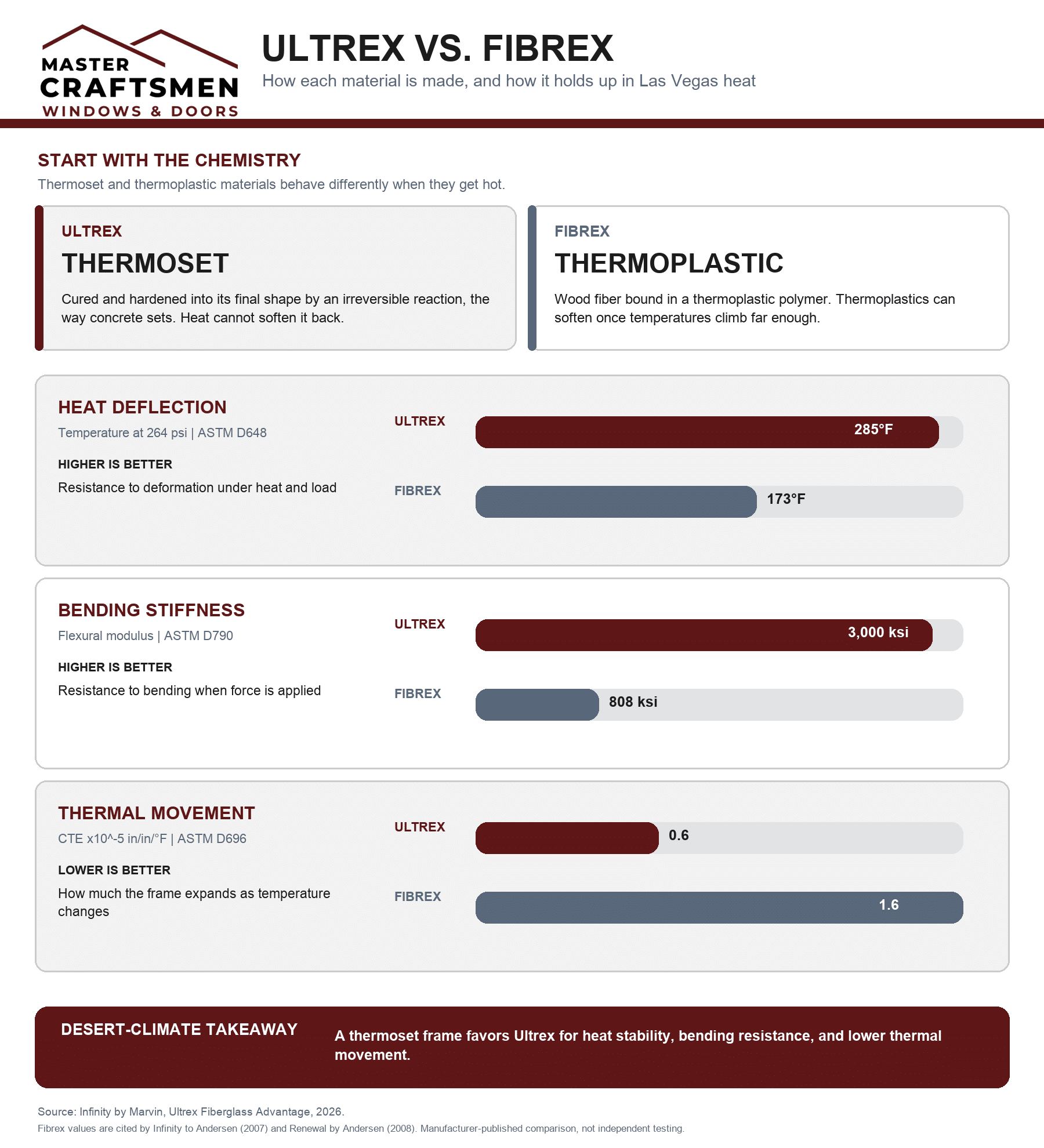
Thermoset vs. thermoplastic. The band at the top of that graphic is what explains the numbers under it. Ultrex is a thermoset, cured and hardened into its final shape by an irreversible chemical reaction, so heat cannot soften it back. Fibrex, like vinyl, is a thermoplastic, a class of material that can soften once it gets hot enough. Infinity’s brochure puts that softening point at 166°F for vinyl. Every number below is a measurement of that same difference: how much shape a frame keeps when the Las Vegas sun works on it year after year.
- Strength: Advantage, Ultrex. Infinity describes Ultrex as eight times stronger than vinyl and three times stronger than Fibrex. More specifically, its 2026 brochure lists an ASTM D790 flexural modulus of 3,000 ksi for Ultrex and 808 ksi for Fibrex. That measures resistance to bending. A stiffer material can support a slimmer frame, giving Infinity windows more visible glass within the same opening.
- Heat stability: Advantage, Ultrex in the published comparison. Infinity’s 2026 material table lists an ASTM D648 heat-deflection temperature of 285°F for Ultrex and 173°F for Fibrex. That does not mean a window frame normally reaches either temperature. It shows the materials’ relative resistance to deformation under heat and load.
- Expansion and contraction: Advantage, Ultrex. The brochure’s ASTM D696 comparison lists a coefficient of thermal expansion of 0.6 for Ultrex and 1.6 for Fibrex, measured as x10^-5 inches per inch per degree Fahrenheit. The lower Ultrex value means less material movement as temperatures change, which helps the frame remain square and reduces repeated stress on seals and hardware.
- Finish and fade: A documented Ultrex advantage, with a practical caveat. Infinity’s acrylic finish is AAMA 624 verified and described as three times thicker than competitive painted finishes. Renewal describes Fibrex as an integrally colored composite that does not require routine painting. Compare available colors, finish warranties, and real samples before deciding.
- Maintenance: A draw. Both manufacturers describe their material as low maintenance. The more useful long-term distinction is how well the frame stays aligned and sealed through years of repeated heat cycles.
The figures above come from Infinity’s 2026 Ultrex brochure, not an independent head-to-head study. The brochure cites its Fibrex data to Andersen and Renewal by Andersen materials published in 2007 and 2008. Use the material tests to understand the frames, then compare NFRC labels and physical samples for the exact window models you are considering.
Ultrex Shines in Las Vegas
Las Vegas is close to a worst-case environment for a window frame. The sun beats down on south and west elevations for most of the day, frame surfaces climb far past the air temperature, and then everything cools off after dark and repeats tomorrow. A material that moves with heat gets exercised here daily in a way milder climates never ask of it.
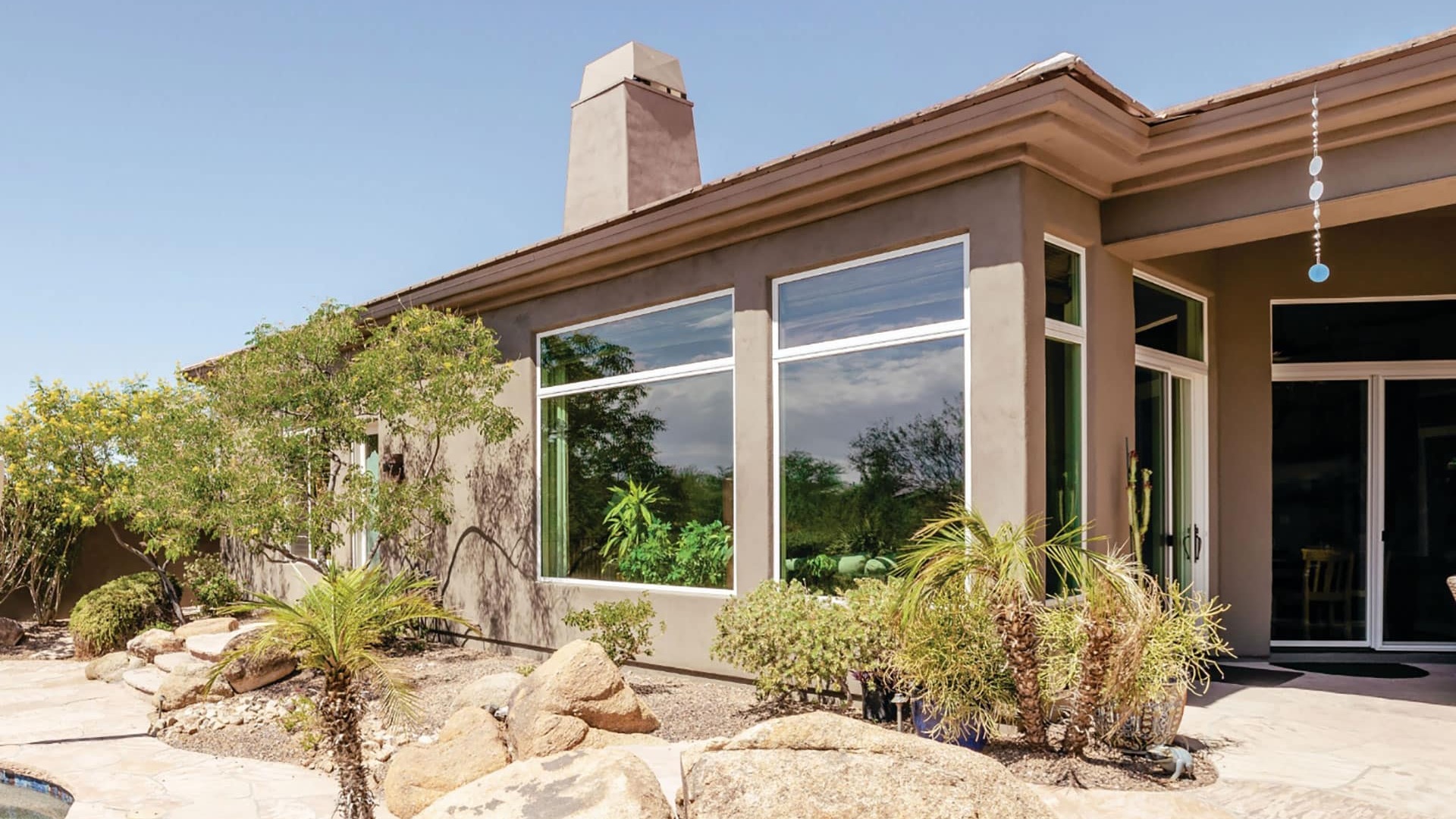
That movement carries an energy cost, not just a repair cost. Gaps at worked-loose seals leak conditioned air at exactly the moment cooling costs peak. According to ENERGY STAR, replacing single-pane windows with certified units lowers household energy bills by an average of up to 13 percent nationwide. Keeping that performance over the years depends on the frame staying sealed and square. We’ve written before about why fiberglass windows hold up so well in modern homes, and the desert is the strongest version of that argument.
There’s a comfort side to this too. The rooms people complain about in a Las Vegas house are almost always the ones behind big west-facing glass. Think of the living room that turns into an oven by late afternoon, or the bedroom that won’t cool down until midnight. A stable, well-sealed frame paired with the right low-E glass is what turns those rooms back into places you want to be in July.
Three Checks Before You Sign With Anyone
You don’t have to take Marvin’s word for any of it, or ours. Every certified window sold in the United States carries a label from the National Fenestration Rating Council, an independent nonprofit that rates energy performance so shoppers can compare products on the same scale. Before you sign with anyone, do three things:
- Compare NFRC labels on the exact models you’re quoted. Look at the U-factor, which measures how well the window insulates, where lower is better. Then look at the solar heat gain coefficient, which measures how much of the sun’s heat passes through, and in the desert you want that number low as well. Compare the same size and style of window, or the numbers will mislead you.
- Hold a sample in your hands. Ask every dealer for a corner section of the frame. Flex it. Check the wall thickness and how the corners join. The difference between materials is obvious after about ten seconds of handling, which is exactly why we keep full-size products on the showroom floor instead of brochures.
- Ask who actually does the installation. A frame rated for 285°F still fails if it’s installed out of square or sealed poorly. Ask whether the crew works for the company or a subcontractor, and who shows up if something needs adjusting in year three. At Master Craftsmen, our own W-2 crews handle every install, the same faces start to finish.
Visit your Infinity by Marvin Dealer in Las Vegas
Master Craftsmen has been family-owned and local since 2004, when Mike Waites opened the business. The company works under Nevada State Contractors Board licenses #58740 and #68202. The full Infinity line is available in our 5,000-square-foot showroom on Dean Martin Drive, where you can operate real windows and patio doors and compare frame materials side by side. It is also the easiest place to get straight answers about window replacement for your specific house.
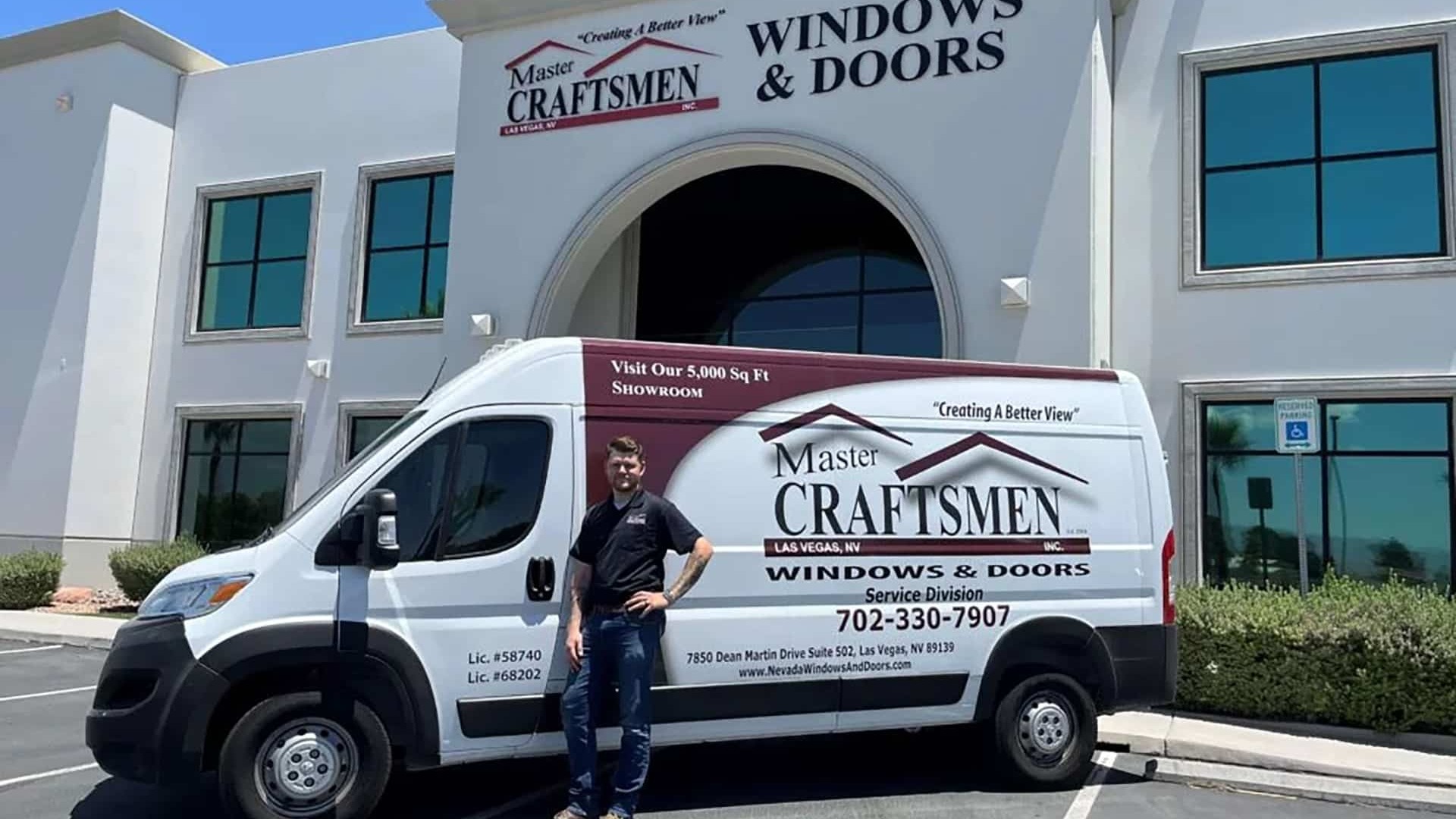
If you’re weighing Ultrex against Fibrex for your own home, the fastest way to decide is to see and measure rather than read another page of claims. Schedule a free in-home estimate, stop by the showroom, or call (702) 330-7907. We’ll bring samples, measure your openings, and give you an honest timeline and a no-pressure quote, backed by our own installation warranty on top of the manufacturer’s coverage.
Frequently Asked Questions
Who makes Ultrex and who makes Fibrex?
Marvin makes Ultrex, the pultruded fiberglass used throughout the Infinity by Marvin replacement-window line and in additional Marvin product collections. Andersen Corporation makes Fibrex, the reclaimed wood fiber and thermoplastic polymer composite used in Renewal by Andersen replacement windows. Each material is proprietary to its manufacturer.
Is Fibrex the same thing as vinyl?
No. Fibrex combines reclaimed wood fiber with thermoplastic polymer, which makes it stiffer and more stable than an ordinary vinyl frame. It is a proprietary composite, not standard vinyl. Ultrex uses a different construction based on continuous fiberglass strands and thermoset resin.
Are fiberglass windows worth the higher price?
Fiberglass typically costs more than vinyl up front, and the value case rests on what happens after installation. A stronger, more stable frame protects the seals and the glass package, which is what delivers the energy performance you paid for. An in-home estimate is the only honest way to put real numbers on your specific project.
What is the best replacement window material?
For strength and stability, fiberglass leads the common options, which is why it usually costs more. Vinyl is the budget pick and works fine in mild climates, wood offers the classic look at the price of upkeep, and aluminum stays popular for slim modern frames. In a hot climate the ranking tilts further toward fiberglass, because heat punishes materials that flex.
Where can I buy Infinity by Marvin windows in Las Vegas?
Infinity by Marvin windows are available exclusively through hand selected dealers. See the entire line on display in one showroom at Master Craftsmen Inc where product, installation, and warranty service all come through one local company.